COVID Alert Portal
Curbing COVID in Canada
Between June 2020 and January 2021, I was Tech Lead for the COVID Alert Portal, part of Canada’s official COVID Alert exposure-notification service.
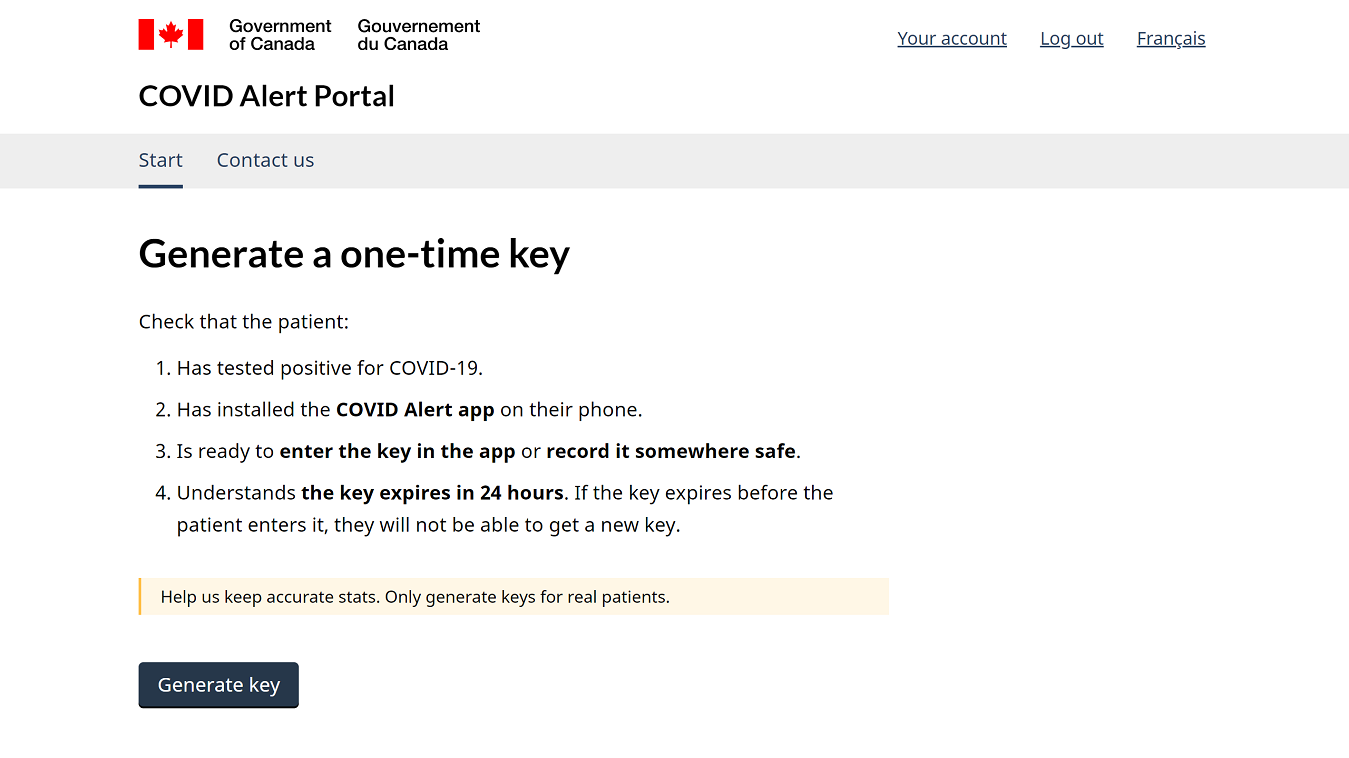
The COVID Alert app was installed on millions of Canadians’ phones. The Portal was the less-famous administrative side of the system: healthcare workers used it to generate one-time keys for people who tested positive for COVID-19. Using a key allowed a person with COVID to anonymously notify others they may have exposed.
I led development of the open-source Django app deployed on an AWS backend, with a robust automated testing and deployment pipeline. We were building during a national emergency, so one of the most important technical decisions was choosing a well-understood technology to get a secure and maintainable service into production quickly.
With the time we saved, we freed the team up to work on higher-level problems, like robust test cases, reusable infrastructure, security processes, and prioritizing accessibility.
The Portal was one third of the COVID Alert ecosystem:
- the app ran on Canadians’ phones and checked for possible exposures.
- the server supported the (anonymous) exchange of exposure-notification data.
- the portal let authorised healthcare workers generate one-time keys for people who tested positive.
The Portal first went into production in Ontario in August 2020 and was eventually used by healthcare workers across seven provinces. Between October 2020 and May 2022, 91,592 one-time keys were generated through the system.
COVID Alert was one of those rare government projects where the urgency was real, and our team was empowered to ship continuously in response to an evolving national problem. I’m still extremely proud to have been part of it.